
START THEM YOUNG
Helping Children Make Better Food Choices Through Nature
When we talk about helping children make better food choices, the conversation often begins with nutrition: eat more vegetables, avoid too much sugar, choose healthy snacks. But what if we looked at food differently?
What if a vegetable could become a lesson in biodiversity?
What if a meal could open a conversation about climate change?
What if a forest could be understood through the foods that grow in it?
Schools have a unique opportunity to help children develop a deeper relationship with food—not simply as something they eat, but as something connected to nature, culture, communities and the future of our planet.
This idea came alive during an interactive learning experience at Mayo College, where students explored food through the lens of ethnobotany—the relationship between people and plants.
Food Is More Than What Is on Our Plate
For most children, food begins and ends with the plate. We eat a vegetable without necessarily knowing where it came from, what season it belongs to, who grew it or what kind of landscape it comes from.
But every ingredient has a story.
A leaf, flower, fruit or seed can tell us about the ecosystem in which it grows. A traditional vegetable can tell us about the communities that have cultivated and eaten it for generations. A disappearing crop can tell us about changing agricultural practices, climate pressures and the loss of traditional knowledge.
This makes food an incredibly powerful starting point for environmental education.
Instead of teaching children about biodiversity only through textbooks, we can ask them to look at the diversity on their own plate.
Turning the Classroom into a Forest Pantry
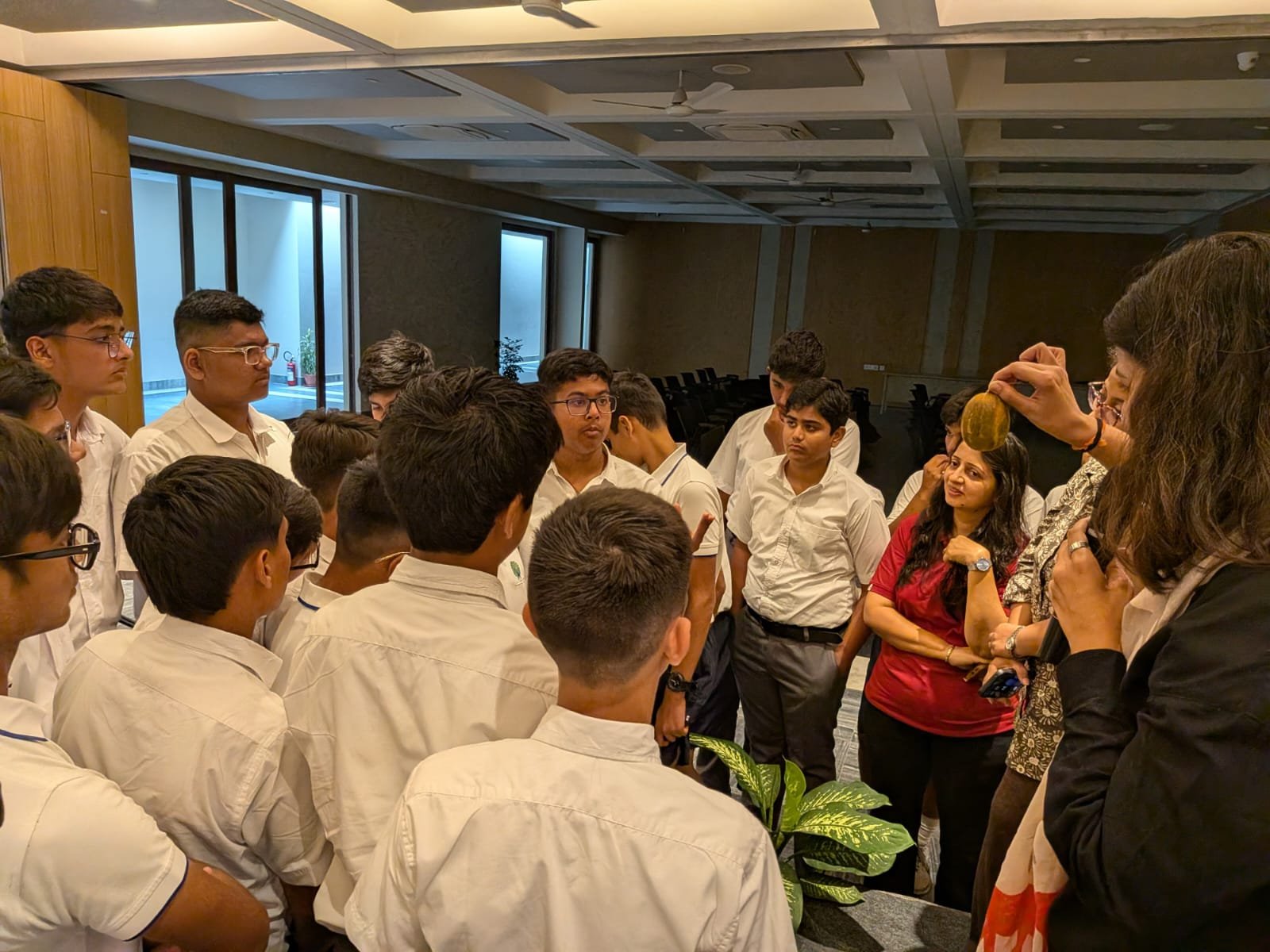
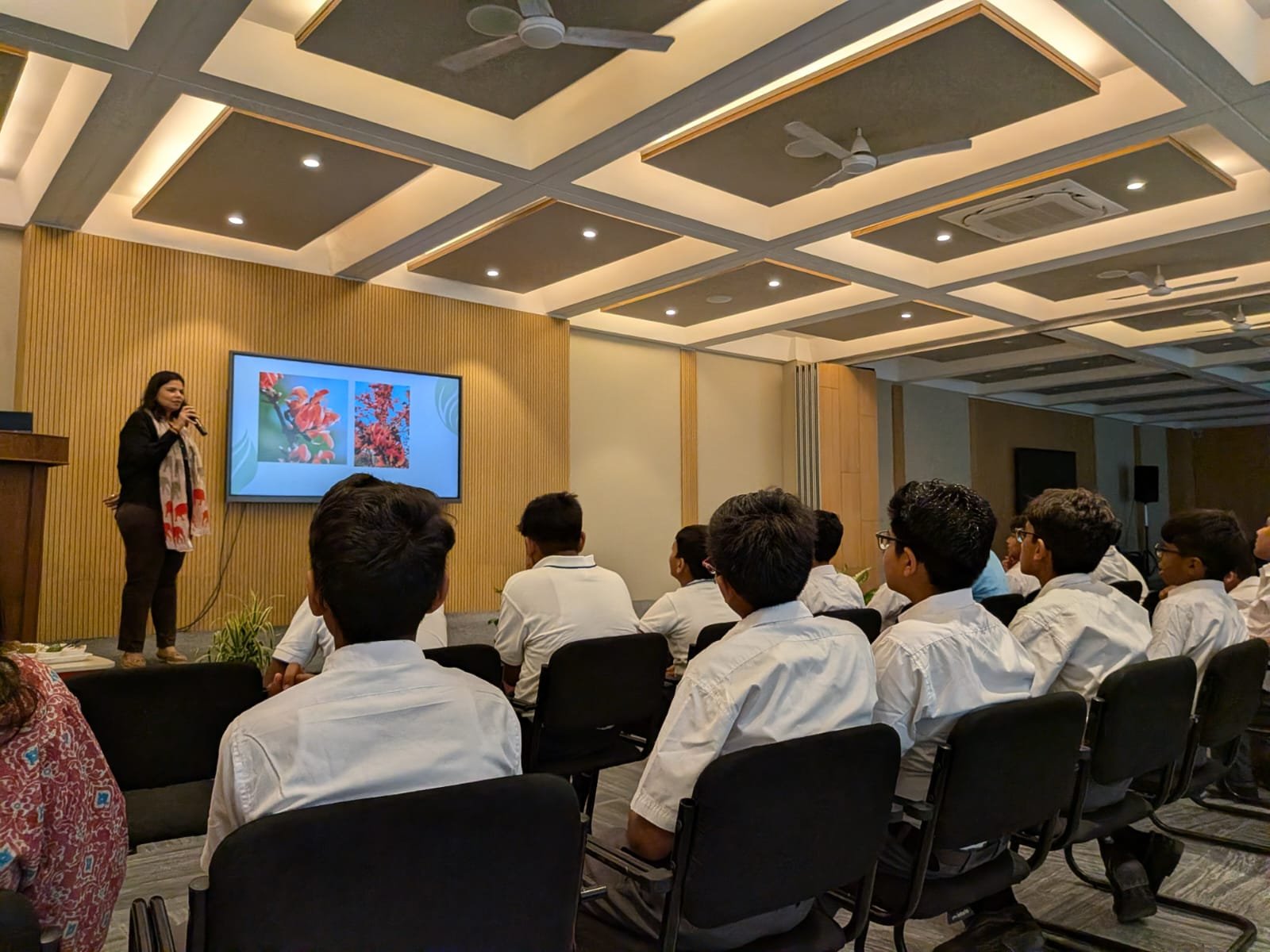
During the middle-school session, The Secret Life of Food: Discovering Nature’s Hidden Pantry, students were introduced to the fascinating world of edible plants and traditional foods through stories, visual games and hands-on activities.
One of the activities was a Rare Vegetable Flash Card Challenge, where students worked in teams to identify unusual vegetables, forest produce and edible plants. They had to guess what the ingredient was, where it grew and whether it was edible.
The activity was simple, but it opened up much bigger questions:
Why have we stopped eating some of these foods?
Why do we see only a small number of vegetables in our markets?
What happens when traditional crops disappear?
Who carries the knowledge of these plants?
Learning suddenly becomes much more interesting when it begins with curiosity.
Teaching Children to Ask Where Their Food Comes From
One of the most important food lessons schools can offer is not “What should I eat?” but:
“Where does my food come from?”
A tomato, for example, is not simply a tomato. It is connected to soil, water, sunlight, farmers, seeds, transportation and markets.
A packet of processed food has an even longer story—ingredients, packaging, manufacturing, transportation and waste.
Understanding these connections helps children see that food choices can have consequences beyond their own health.
This is where food education can become climate education.
Children can begin to understand ideas such as seasonality, local food systems, food miles, agricultural biodiversity, water use, food waste and sustainable farming through something as familiar as their lunch.
From “Healthy Food” to “Responsible Food”
Nutrition education usually focuses on what is good for our bodies. Sustainability asks us to think about what is good for the larger ecosystem as well.
The two conversations do not have to be separate.
Schools can encourage students to think about questions such as:
-
- Is this food seasonal?
-
- Where was it grown?
-
- Is it locally available?
-
- How much food is being wasted?
-
- Are we eating a diverse range of plants?
-
- What traditional foods exist in our region?
-
- What happens to the farmers and communities who produce our food?
These questions help children move from simply being consumers of food to becoming conscious participants in the food system.
Learning from Indigenous and Traditional Knowledge
Food is also a doorway into understanding communities and cultures.
Across India, indigenous and local communities have developed detailed knowledge of the plants, forests and landscapes around them. They know which plants are edible, which parts can be harvested, when they should be collected and how they can be prepared.
This knowledge represents generations of observation and experience.
Yet, as food systems become increasingly standardized, many traditional foods and practices are disappearing.
Introducing children to these foods can help them understand that conserving biodiversity is not only about protecting forests and wildlife. It is also about protecting the knowledge, cultures and food traditions that are connected to those ecosystems.
Making Learning Interactive
Children do not always need another lecture. Sometimes, they simply need an opportunity to observe, guess, question and explore.
Activities such as “Guess the Edible” encouraged students to think about whether different leaves, flowers, fruits and seeds could be eaten. The discussion then moved beyond the game to an important lesson: responsible foraging requires knowledge, caution and respect for nature.
A Forest Food Quiz turned concepts about plants, insects, spices, forests and traditional foods into a lively team activity.
These experiences demonstrate an important principle for schools:
Environmental education becomes more powerful when children can experience it rather than simply hear about it.
Food Can Also Help Children Imagine Their Future
For older students, food can become a way of exploring careers and possibilities.
The senior-school session, Building an Unconventional Career: Food, Sustainability & Community, explored how interests in food and nature can lead to careers beyond the conventional pathways students often hear about.
Ethnobotany, conservation, sustainable food systems, research, food innovation, entrepreneurship, community development and social enterprise are all emerging spaces where science, creativity and social impact intersect.
Students were encouraged to think about a bigger question:
Can a career be both a livelihood and a way of creating meaningful change?
Food provides a fascinating entry point into that conversation because it sits at the intersection of so many disciplines—biology, agriculture, ecology, culture, business, design, technology and community development.
Schools Can Shape the Food Choices of the Future
Children will eventually make their own decisions about what they eat, buy and consume. Schools can play an important role in helping them make those decisions consciously.
This does not mean telling children that certain foods are “good” and others are “bad.”
Instead, it means giving them the tools to ask better questions.
What is this food?
Where did it come from?
Who produced it?
What season does it belong to?
What impact does it have on nature?
What traditions and stories does it carry?
When children start asking these questions, food becomes a classroom without walls.
A vegetable garden can teach biology.
A traditional recipe can teach history and culture.
A disappearing crop can teach biodiversity.
Food waste can teach resource conservation.
Seasonality can teach ecology.
A forest food can teach indigenous knowledge.
And the choices on a lunch plate can become a lesson in sustainability.
Building a More Conscious Relationship with Food
The goal is not to make every child a botanist, chef or environmentalist.
The goal is much simpler: to help children become curious about the food they eat and the world that makes that food possible.
At Mayo College, the sessions were designed not as traditional lectures, but as immersive experiences built around stories, photographs, games, conversations and real-world examples.
Because sometimes the best way to teach children about nature is not to take them away from food—but to help them look more closely at what is already on their plate.
If we want the next generation to make better food choices, we need to give them more than nutritional information.
We need to help them understand the living systems behind their food.
And perhaps that is where food education truly begins: not with “What should I eat?”, but with a much more powerful question—
“What story does my food tell about the world around me?”
